



Google Ad Manager Earnings for Private Blogs: From Daily Estimates to Wallet Payments
A private blog gives you a focused place to build an audience, a recognisable publishing identity, and valuable specialised content. With Google Ad Manager (GAM) earnings, eligible Amwaly private blogs can follow advertising revenue connected to verified Google site reporting, with a clear distinction between daily estimates and money that has actually been settled and paid.
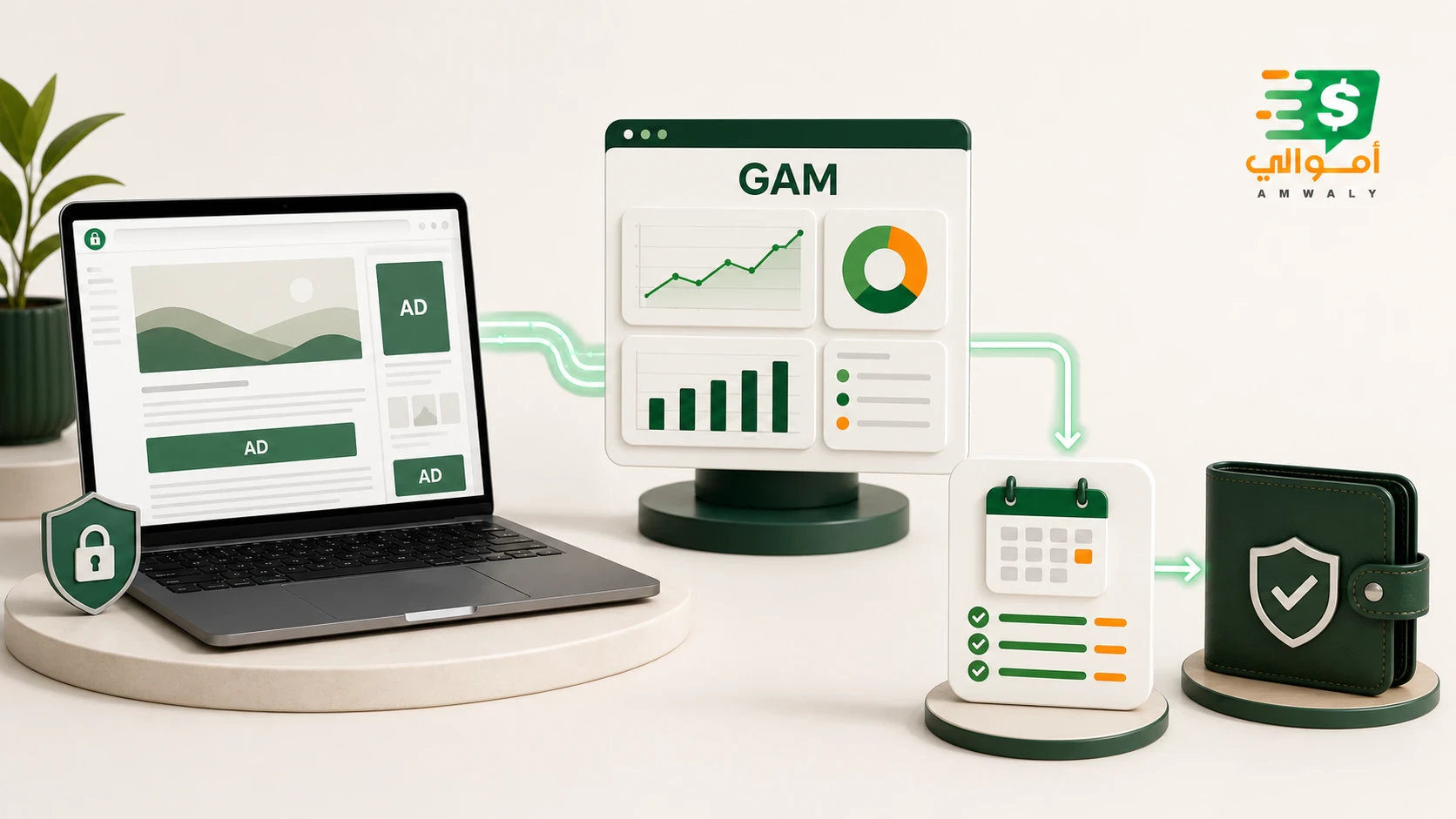
From private-blog advertising and GAM reporting to monthly reconciliation and a confirmed wallet credit.
GAM can create stronger revenue opportunities for some blogs because it reflects actual Google advertising demand. It does not provide fixed income, a guaranteed CPM, or a guaranteed earnings amount.
What is GAM for private blogs?
GAM stands for Google Ad Manager. When GAM is enabled for an eligible private blog, Amwaly receives Google report data by Site and Date and maps it to the blog that owned that site on the reporting day. Performance figures and revenue estimates can then appear in the publisher dashboard.
Publishers do not need to connect a Google account or create API credentials. The platform manages the technical reporting connection, while the publisher focuses on content, genuine traffic, and understanding the results.
GAM vs internal earnings
| Internal platform earnings | GAM earnings |
|---|---|
| Follow Amwaly's existing article-earning rules. | Use verified Google reporting for the site and date. |
| Revenue belongs to the normal article-earning flow. | Revenue is reported at private-blog level. |
| Active before GAM starts and from the return-to-internal date. | Active only during the approved GAM period. |
| Does not use the site's Google report. | Keeps Google advertising data separate from internal visits. |
One earnings source per day
Each private blog uses one earnings source for each calendar day. If GAM starts on August 10, August 1 through August 9 remain under internal earnings, and GAM begins on August 10. If the blog returns to internal earnings on September 1, new activity from September 1 follows the internal system while historical GAM records remain available separately.
No double counting: the same visit cannot generate both internal and GAM earnings for the same day.
How to check your blog's status
Open Dashboard → Private Blogs → Select your blog, then review Current earnings source. You may see:
- Google Ad Manager (GAM): the blog is currently using GAM.
- GAM scheduled: GAM will start on a future date and internal earnings continue until then.
- Internal platform earnings: the blog currently uses the normal internal system or has returned to it after GAM.
How to use the GAM dashboard
1. Start from Private Blogs
If you have current or historical GAM activity, the page provides quick access to this guide and the settlements page. It also keeps three values separate:
- Estimated GAM net for the last 30 days: a recent performance estimate, not paid balance.
- Total GAM paid to wallet: money that has already been credited.
- GAM awaiting settlement: amounts that have not completed the payment cycle.
2. Open a specific blog
The blog page shows its earnings source, selected date range, latest sync, estimated revenue data, internal traffic, and settlement history when available.
3. Use the combined GAM statistics tab
If you own several GAM blogs, the GAM Private Blog Statistics tab provides an account total and a comparison between blogs. Start with the combined view, then open an individual blog for full detail.
How to read Google figures
- Ad requests: recorded opportunities to request an ad.
- GAM impressions: ad displays recorded by Google.
- Clicks: advertising interactions in the report.
- Estimated gross revenue: revenue before the platform share and final reconciliation.
- Platform deduction: the effective percentage stored for each reporting day.
- Estimated publisher net: the estimate after the platform deduction, but before wallet payment.
If the platform rate changes later, old reporting days are not silently rewritten. Each daily record retains the rate that applied to its date.
Google impressions are not article visits
The system separates Google advertising data from internal Amwaly traffic. An ad impression is not the same event as an article visit, so the totals do not need to match.
CPM for internal views is a derived indicator based on estimated publisher net per 1,000 valid internal visits. It is not Google Ad Exchange eCPM and is not a guaranteed future rate.
When do statistics update?
The dashboard reads from Amwaly's database to keep page loading fast. The current Google report is synchronised in the background at the interval selected by the platform, such as every 30 minutes, every hour, or longer.
Recent days can be checked again because Google may revise reporting. During the first days of a new month, the previous month is also checked before settlement preparation. Internal visits can therefore appear before Google revenue, and a recent estimate can change after a new sync.
Daily figures are performance estimates. They become a final financial record only after monthly reconciliation and confirmed payment.
What happens to articles during GAM?
Articles continue to record views and traffic, but the platform does not create an additional internal earning for the same activity during the active GAM period. Revenue is organised at blog level because Google's report belongs to the site.
You can still analyse valid and invalid visits, improve titles and content, and build a stronger reader experience while GAM revenue remains organised in the blog's dedicated reporting section.
From daily estimate to wallet balance
1Daily estimates
2Final month review
3One settlement per blog
4Confirmed wallet payment
Daily GAM revenue is not paid to the wallet every day. Payment occurs only after the month ends, the final Google total is reviewed, settlements are prepared, and the platform confirms the payment operation.
Is there a fixed settlement date?
The system has a configurable monthly settlement day. Its default value is the fifth day of the month, although the platform can change it. This is the day on which preparation for the previous month begins; it is not a promise of automatic payment at the same minute.
If the settlement day is August 5, the settlement covers July 1 through July 31. The first five days of August remain part of the August reporting cycle.
When does money reach your balance? When the settlement status becomes Paid and a payment date is shown. An estimate or draft settlement is not a wallet credit.
How is monthly reconciliation calculated?
The final Google total is not divided equally between blogs. Each blog's share is based on its recorded daily report data. The system compares the combined estimates with the final Google total, applies the reconciliation difference proportionally, calculates the platform deduction using the stored daily rates, and produces final publisher net for each blog.
A simple example
If a blog has estimated revenue of $100 and a 20% platform share, estimated publisher net is $80. If its reconciled gross becomes $98, the deduction is calculated from the reconciled figure and the updated publisher net is shown in the settlement. If reconciled gross becomes $102, the same formula produces a higher final net.
Where to find settlements and what statuses mean
Open Dashboard → Private Blogs → GAM Settlements. Each settlement shows the month, blog, estimated revenue, reconciled revenue, publisher net, status, and payment date.
| Status | What it means to the publisher |
|---|---|
| Draft | The settlement has been prepared and awaits review. |
| Ready | The settlement is ready in the payment workflow. |
| Approved | The settlement or reconciliation has passed its approval stage. |
| Paid | A wallet transaction was created successfully. This confirms the credit. |
| Failed | Payment did not complete. The platform can review the cause and retry safely. |
| Reversed | A special operational state, not a new publisher payment. |
What happens after successful payment?
- Positive publisher net is credited to the wallet.
- The transaction records the settlement, blog, and month.
- Eligible GAM points are recorded in points history.
- Points enter the points wallet when that platform feature is enabled.
- Blog and account summaries are refreshed.
- An in-platform notification and email are sent, with browser push when enabled.
The payment service prevents duplicate settlement payments. If a failure occurs before financial records are created, the platform can fix the cause and retry.
Points and referrals
Points are calculated from positive final publisher net. Fractional points are retained rather than lost, which is especially useful when a publisher owns several blogs.
If an eligible referral relationship exists under the active referral plan, the referrer can receive a separate GAM referral commission after successful payment. It appears in referral earnings and produces its own notification.
Managing multiple private blogs
Each blog keeps its own site mapping, statistics, applied rates, and settlement. The combined GAM tab provides account totals and blog comparison. Settlements for the same publisher and month can be processed together to keep point calculations accurate, while each blog remains visible as a separate record.
What if Google revises a paid month?
The system does not automatically withdraw a negative late correction from your wallet. It records the late adjustment and can carry it into a later settlement while preserving the original paid record. Positive late adjustments are also recorded for a later settlement.
Frequently asked questions
Do I connect Google Ad Manager myself?
No. The platform manages the technical connection and reporting; you follow the results in your dashboard.
Does every private blog receive GAM automatically?
Not necessarily. It depends on program availability, blog eligibility, and approval. The earnings source shown in blog details is the correct reference.
Is estimated GAM net already in my wallet?
No. It becomes wallet balance only when the settlement reaches Paid status.
Why can the final amount differ from the estimate?
Google can revise monthly reporting. Reconciliation displays the difference transparently.
Do internal earnings return when GAM ends?
Yes, from the configured return date. Historical GAM data and settlements remain separately available.
Does more traffic increase revenue at a fixed rate?
No. Revenue depends on advertising demand, traffic quality, and actual Google reporting. There is no fixed price per 1,000 visits.
Key takeaways
- Daily GAM figures are estimates, not daily payments.
- Each day has one earnings source: internal or GAM.
- Each private blog has its own statistics and settlement.
- A settlement covers one complete previous month.
- Paid status confirms that money reached the wallet.
- Points, referrals, and notifications follow confirmed payment.
